Skip to content
100% Australian owned
(02) 4304 5988

Attachment guide

Excavator Ripper vs Hydraulic Hammer: Which One Fits the Job?

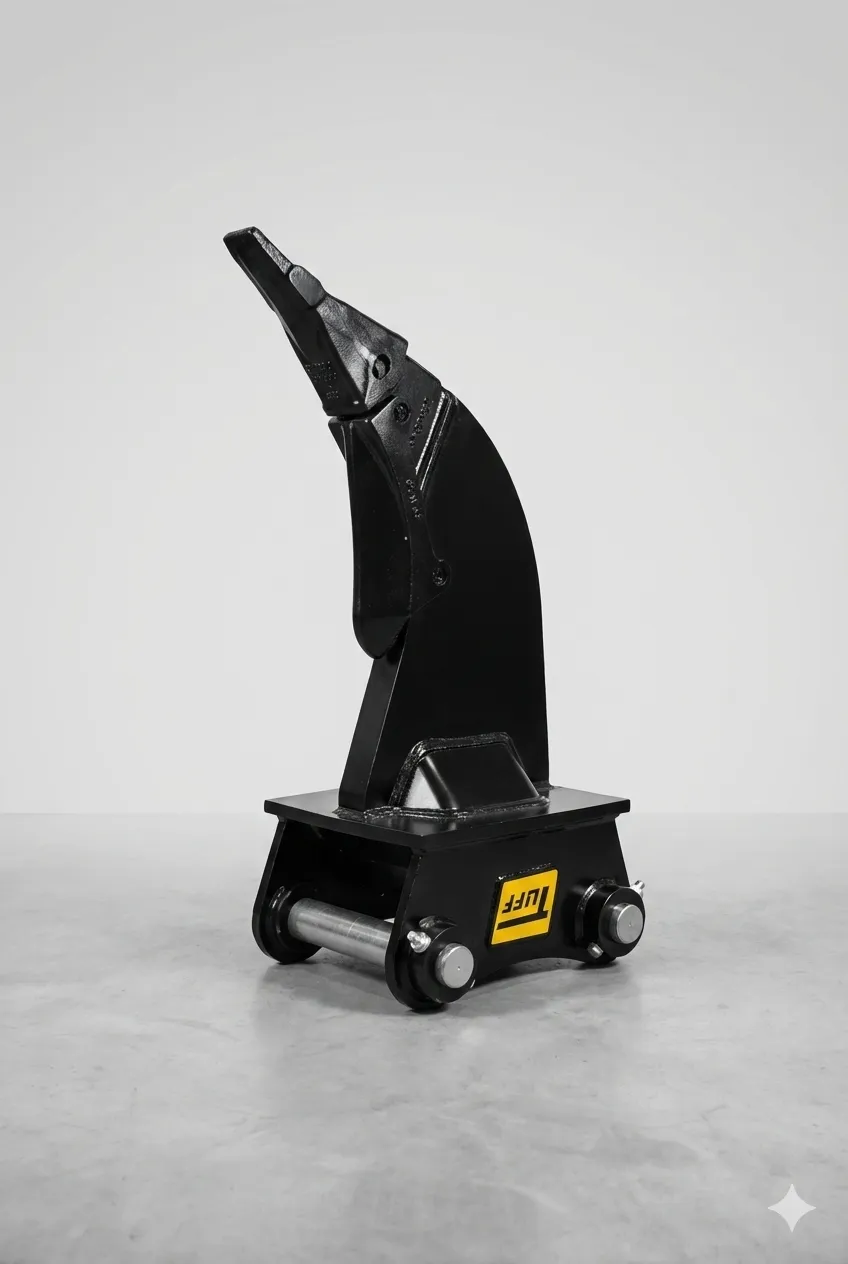
Rippers and hammers both help when a standard bucket struggles, but they solve different problems. A ripper concentrates breakout force through one tine. A hydraulic hammer uses impact energy for rock, concrete and demolition work.

  • Hard ground
  • Rock and concrete
  • Hydraulic setup

What this guide covers

Hard groundRock and concreteHydraulic setup
Excavator Ripper vs Hydraulic Hammer: Which One Fits the Job?

Use a ripper for penetration and tearing

A ripper is a mechanical attachment that concentrates force into a narrow point. It is useful for hard clay, compacted ground, roots, asphalt edges and some softer rock where a bucket cannot bite cleanly.

  • No hammer plumbing is required because the bucket cylinder does the work.
  • Useful for breaking up ground before switching back to a bucket.
  • Lower complexity than a hydraulic hammer for suitable ground conditions.

Use a hammer for impact breaking

A hydraulic hammer is the better fit for concrete, harder rock and demolition work where repeated impact is needed. The tradeoff is hydraulic setup, consumables and matching the hammer to the machine.

  • Best for concrete, rock breaking and demolition tasks.
  • Requires suitable auxiliary hydraulic flow and pressure.
  • Chisel choice and maintenance affect performance and wear.

Send the material details before quoting

The most useful quote detail is not just the machine model. Explain what the attachment must break and how often the job comes up. That helps decide whether a ripper, hammer or both should be considered.

  • Describe the material, site conditions and depth or thickness where possible.
  • Include photos of the ground, rock, slab or root mass.
  • Say whether this is one job, recurring work or a hire requirement.

Quote checklist

Details to send before requesting a quote

Use this list to give the team the fitment, application and freight context needed to price the right attachment.

Send these details first

It helps the team confirm fitment, availability and freight faster.

  • Excavator make, model and tonnage.
  • Material being broken, such as hard clay, shale, roots, asphalt, rock or concrete.
  • Approximate size and frequency of the work.
  • Whether auxiliary hydraulics are fitted.
  • Pin or quick hitch details.
  • Photos of the work area and current attachment pickup.
  • Whether you need to buy or hire the attachment.

Common questions

Can a ripper replace a hydraulic hammer?

Sometimes, but not always. A ripper can be a practical option for hard ground, roots and softer material. Concrete and harder rock usually call for a hydraulic hammer.

Does a ripper need hydraulics?

No. A ripper works mechanically through the excavator arm and bucket cylinder, which makes it simpler than a hydraulic hammer.

What should I send before asking for advice?

Send the excavator model and tonnage, the material you need to break, photos of the work area and photos or measurements of the current attachment pickup.

Next step

Need help choosing the right attachment?

Send the guide details with your machine model, photos and timing. Tuff Buckets will confirm the practical next step.